
Driven by the dual forces of food industrialization and consumption upgrades, the global canned food market is entering a cycle of robust and steady growth. As a category that balances convenience, safety, and nutrition, canned food has successfully transcended traditional boundaries. Its core advantages—diverse consumption scenarios, long shelf life, and low transportation costs—have led to a continuous surge in demand across household consumption, foodservice (catering), and cross-border trade.
In recent years, influenced by the popularization of healthy eating, supply chain upgrades, and the rise of emerging markets, the global canned food market has expanded steadily. The category structure is continuously optimizing, presenting new growth characteristics and development opportunities. This article provides a comprehensive analysis of global market trends to offer strategic reference for industry participants.
I. Steady Market Expansion and Strong Growth Momentum
The global canned food market has entered a mature growth phase, with its scale reaching record highs. Data indicates that the global market valuation exceeded USD 120 billion in 2024. It is projected to maintain a Compound Annual Growth Rate (CAGR) of 4.5% to 5% from 2025 to 2030, with the market size expected to surpass USD 150 billion by 2030.
This growth is fueled by both supply and demand:
-
Demand Side: Fast-paced lifestyles have increased the demand for "ready-to-eat" (RTE) solutions. Simultaneously, heightened awareness of emergency stockpiling has made canned goods essential inventory for households and public institutions.
-
Supply Side: Upgrades in production technology have solved traditional pain points, such as monotonous flavors and excessive additives, significantly enhancing product competitiveness.
-
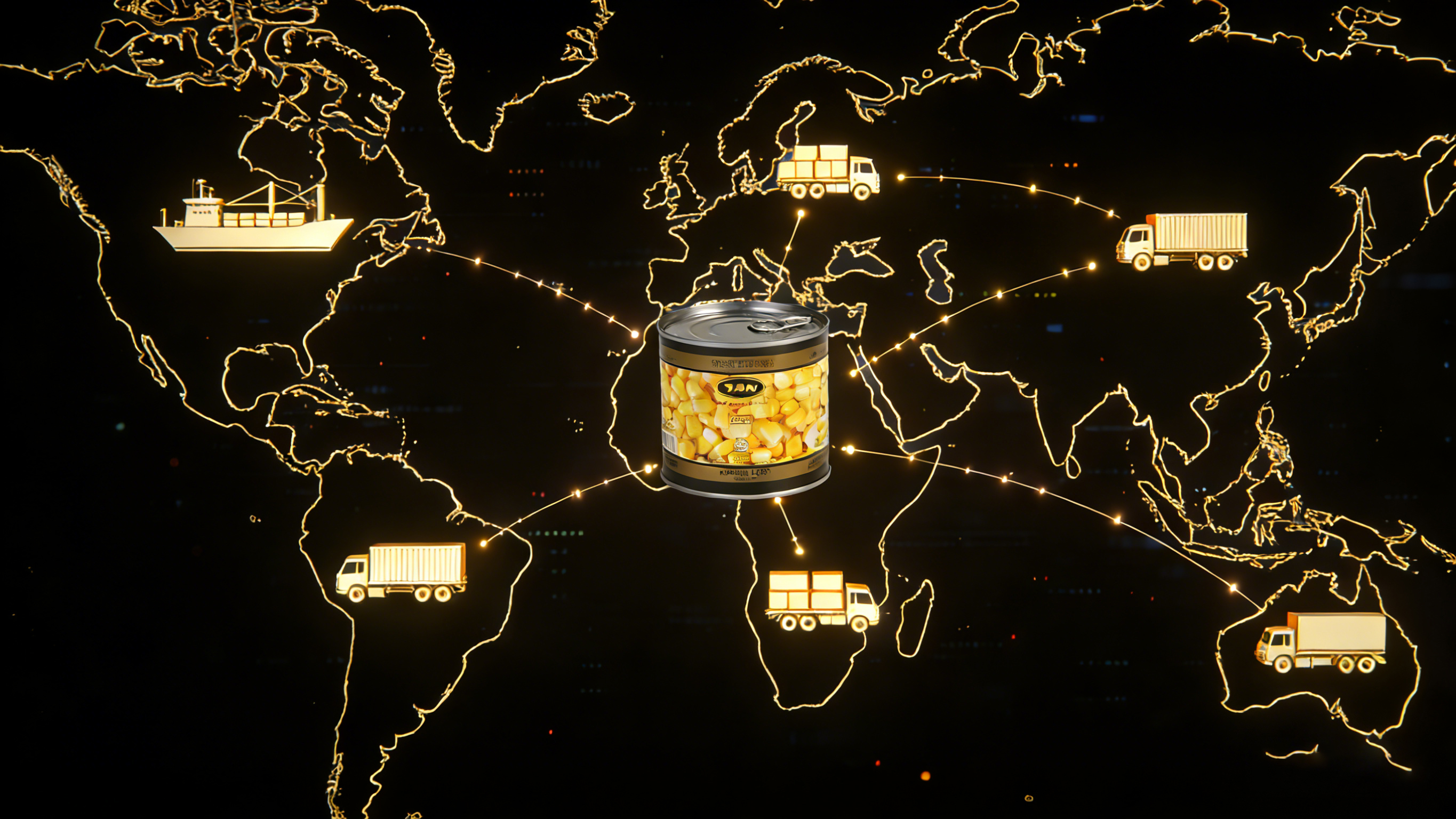
Global Trade: Deepening cross-border trade via e-commerce and improved logistics has boosted efficiency. Traditional powerhouses like China, the US, and Italy serve as global trade hubs, matching the niche needs of mature markets (Europe/Japan/Korea) with the basic needs of emerging markets (Southeast Asia/Africa).
II. Multi-Dimensional Growth Drivers: The Foundation of the Market
1. Health-Conscious Upgrades
Health is the core trend in the global food market. The industry has shed its "high salt, high sugar, high additive" label. Manufacturers now focus on preservative-free, low-temperature freshness locking, and low-sodium/low-fat formulas. For example, seafood cans use high-pressure retort sterilization to achieve a 2–3 year shelf life at room temperature without preservatives while retaining native nutrients.
2. Extension of Consumption Scenarios
Usage has expanded from simple side dishes to:
-
Foodservice/Catering: Standardized ingredients for chain restaurants to reduce labor costs and waste.
-
Outdoor/Exploration: High-energy, portable cans for camping and adventure.
-
Gifting: High-end, customized gift boxes for festive occasions.
3. Supply Chain and Technological Upgrades
Automated production lines and intelligent quality control (QC) have standardized the entire process, reducing unit costs. Enhanced traceability, especially in seafood (sourcing from compliant deep-sea fisheries), has increased consumer trust.
4. The Rise of Emerging Markets
While mature markets (North America/Europe) remain the core, Southeast Asia, Africa, and Latin America show higher growth potential. Their rapid urbanization and the proliferation of retail channels (supermarkets/convenience stores) have made canned food a preferred choice due to its high cost-performance ratio and suitability for local logistics conditions.
III. Significant Differentiation Among Sub-Categories
-
Seafood Cans: The "star category" due to high-protein and low-fat trends. Growth rates exceed 10% annually. Companies like Chenzi Trade represent this success, exporting 55,000 tons in 2022 and generating USD 72 million in foreign exchange.
-
Fruit and Vegetable Cans: Maintaining steady growth. Niche items like canned bayberry and lychee are becoming new hotspots, while tomatoes and mushrooms remain staples in the foodservice sector.
-
Functional Cans: A rising niche targeting specific demographics, such as soft-textured cans for the elderly, high-protein versions for fitness enthusiasts, and specialized baby food supplements.
IV. Regional Landscape and Re-Shaping Competition
-
Mature Markets: North America and Europe account for over 50% of global consumption. These regions demand high-quality, branded, and eco-friendly products.
-
Growth Engines: Asia is the fastest-growing region. China is the world’s largest producer and exporter. Clusters like Zhangzhou (the "Canned Food Capital of China") have created comprehensive production systems that serve the world.
-
Future Poles: Africa and Latin America are expected to become the next growth poles as retail infrastructure improves.
V. Future Outlook: Innovation and Compliance Leading High-Quality Development
The future of the market will be shaped by six dimensions:
-
Innovation: Health and functionality (low-sugar/salt) will lead. In North America, the penetration of "Smart Cans" (self-heating/antibacterial) has reached 25%.
-
Supply Chain Clusters: Integrated clusters (like Pingyi County or Zhangzhou) that manage everything from "planting to packaging" significantly reduce costs.
-
Green Production: Digital management and energy-saving investments (aiming for 30% lower energy consumption) are becoming core competencies.
-
Compliance: Stricter FDA, CE, and ISO standards act as "gatekeepers" for market entry.
-
Channel Evolution: Online channels are booming; by 2025, online sales for canned fruits in China are expected to reach 55%.
-
Sustainability: Eco-friendly packaging (recyclable/biodegradable) now accounts for 40% of the market in mature regions.
VI. Strategic Recommendations: Navigating Global Challenges
To transform challenges into competitive advantages, enterprises should focus on five core strategies:
1. Build a Full-Chain Compliance System
Establish professional teams to track global policies regarding additives, labeling, and traceability. For SMEs, utilizing shared laboratories and third-party technical assistance can lower the barrier to entry.
2. Optimize Cost Control Models
Mitigate raw material and logistics volatility through long-term strategic partnerships and "price-locking" agreements. Implementing automated production is essential to offset rising labor costs.
3. Deepen Differentiated Innovation
Break through homogenization by focusing on:
-
Targeted Nutrition: High-protein for athletes, soft-milled for the elderly.
-
Flavor Localization: Curry flavors for SE Asia, herb-infused meats for Europe/US.
-
Smart Packaging: Antibacterial or biodegradable materials.
4. Strengthen Supply Chain Resilience
Utilize the advantages of industrial clusters (e.g., Zhangzhou’s ability to provide cans, lids, and glass bottles locally) to ensure rapid delivery and lower costs. Use IoT and Big Data for real-time inventory and logistics visibility.
5. Precision Global Layout
-
Mature Markets: Focus on brand building and premiumization.
-
Emerging Markets: The Zhangzhou Model serves as a benchmark. In 2024, Zhangzhou’s canned food output reached 989,400 tons. Its exports of canned longan, lychee, peanuts, and bamboo shoots account for a massive share of China's total exports (72.2%, 54.7%, 30.9%, and 17.4% respectively). Leading enterprises like Tancen Trade and Gangchang Food (with an annual capacity of 60,000+ tons) demonstrate the power of localized adaptation and massive production scale.
Conclusion
The global canned food market faces a future where growth and challenges coexist. Success belongs to those who view compliance as the baseline, innovation as the core, and the supply chain as the pillar. By adopting a global perspective and leveraging industrial cluster advantages, enterprises can navigate the complexities of the market to achieve high-quality, sustainable growth in this new "golden cycle" of canned food.




》-01.jpg)
-01.jpg)